
The healthcare landscape in India is rapidly evolving, and mHealth app development is at the forefront of this transformation. With over 6.7 billion smartphone users worldwide and growing mobile penetration in India, mobile health (mHealth) apps are revolutionizing how patients access care.
These apps enable remote consultations, real-time patient monitoring, digital health records, and seamless communication between patients and healthcare providers. From metropolitan hospitals in Delhi and Mumbai to rural clinics in Tamil Nadu and Uttar Pradesh, mobile healthcare technology is bridging gaps in access, efficiency, and patient engagement.
What is mHealth App Development?
According to the World Health Organization (WHO), mHealth is the use of mobile and wireless technologies to support public health. This encompasses everything from wearable health devices to AI-powered digital health assistants.
mHealth app development focuses on building mobile applications that go beyond basic health tracking or reminders. Modern apps now offer advanced services such as:
- Remote patient monitoring and virtual consultations
- AI-driven diagnostics and chronic disease management
- Medication reminders and mental health support
- Mobile access to electronic health records (EHRs)
- Hospital workflow management
- Data analytics for clinicians
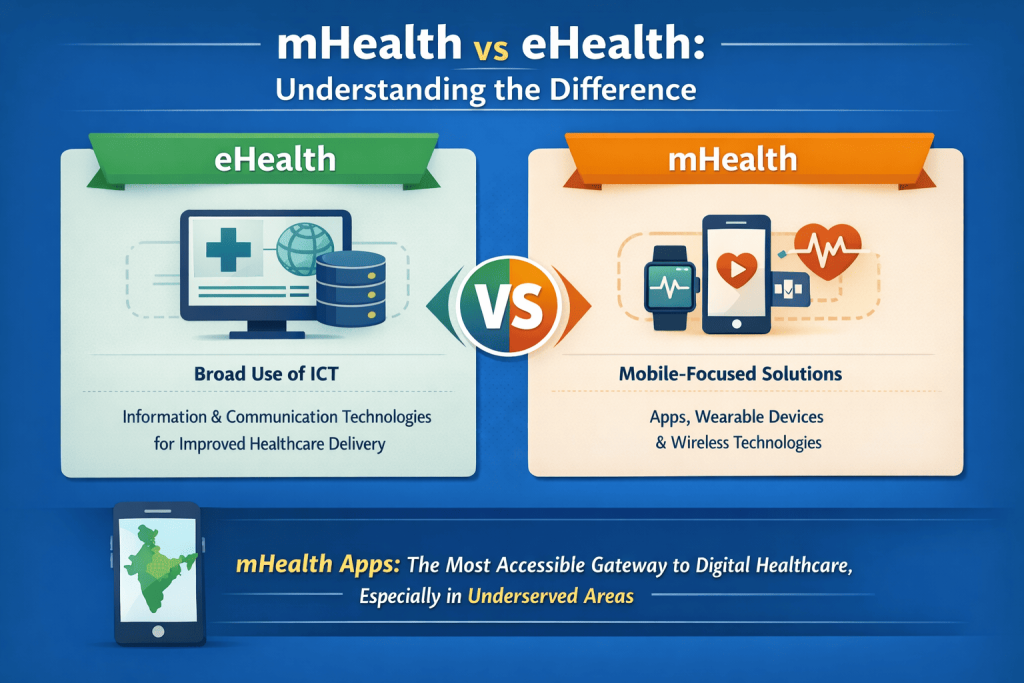
mHealth vs eHealth: Understanding the Difference
Although the terms are often used interchangeably, there is a key distinction:
- eHealth – The broader application of information and communication technologies (ICT) to improve healthcare delivery.
- mHealth – The mobile-focused branch of eHealth, emphasizing apps, wearable devices, and wireless solutions.
Given the widespread adoption of smartphones in India, mHealth apps are the most accessible gateway to digital healthcare, especially in underserved areas.
Key Features of mHealth Apps
A successful mHealth app must offer features that improve patient engagement and provider efficiency. Essential components include:
- Health Tracking – Monitor heart rate, sleep, calories, activity, and sync data from wearables.
- Appointments & Scheduling – Book, confirm, and manage doctor visits with timely reminders.
- Medication Alerts – Notify patients about prescriptions, follow-ups, and exercise routines.
- Patient Information Database – Securely store medical records, lab results, and medications.
- Geolocation Services – Track emergencies, nearby clinics, and patient visits.
- Real-Time Communication – Chat with healthcare providers for immediate guidance.
- Payment Gateway – Enable secure in-app payments for services without cash hassles.
- Ratings & Reviews – Share and view experiences to help patients select trusted providers.
- Cloud Integration – Access and update patient data securely from anywhere.
- Reporting & Analytics – Analyze health trends, improve outcomes, and personalize care.
The mHealth App Development Process
A structured approach ensures a successful mHealth app:
- Identify the Problem – Define the specific healthcare challenge the app addresses.
- Choose an Experienced IT Partner – Collaborate with developers knowledgeable about healthcare regulations in India.
- Project Evaluation – Assess requirements, timelines, and resources to ensure feasibility.
- UI/UX Design – Craft intuitive, visually appealing interfaces for patients and providers.
- Development – Build the app with APIs, multi-platform support, and scalable architecture.
- Testing & QA – Conduct rigorous testing to ensure reliability, compliance, and user satisfaction.
- Project Delivery – Launch the app with proper documentation and deployment to app stores.
- Maintenance & Support – Provide ongoing updates, bug fixes, and technical assistance.
Challenges in Developing mHealth Apps
Creating mHealth solutions comes with unique hurdles:
- Regulatory Compliance – Adhere to HIPAA, EU Data Protection Act, and Indian healthcare regulations.
- Data Security & Privacy – Protect patient information with encryption, strong authentication, and secure access controls.
- Interoperability – Ensure smooth integration with other healthcare systems using standard protocols.
Latest Trends in Mobile Healthcare Apps
The mHealth sector continues to evolve with innovations that improve patient care:
- Remote Patient Monitoring (RPM) – Track vital signs in real-time to enable early intervention.
- Wearable Device Integration – Sync smartwatches and fitness trackers with apps for health insights.
- Health Gamification – Use game-based incentives to promote healthy habits.
- AI-Powered Diagnostics – Apply AI and machine learning for faster, accurate medical analysis.
- Big Data Analytics – Analyze patient data to identify trends and personalize treatment plans.
Conclusion: The Future of mHealth in India
mHealth app development is redefining healthcare in India by improving accessibility, patient engagement, and overall outcomes. Partnering with the right development team ensures compliance, usability, and innovation, guiding your app from concept to launch.
For hospitals, clinics, and healthcare startups, investing in mobile healthcare technology is no longer optional, it’s a critical step toward modern, patient-centered care.
Visit us at: www.biovustechnologies.com
FAQs
What is mHealth app development?
Developing mobile applications that deliver healthcare services, monitor patients, and improve engagement.
Why is mHealth important in modern healthcare?
It enhances access, facilitates remote care, and improves patient outcomes.
Do mHealth apps support chronic disease management?
Yes, they help track conditions like diabetes, hypertension, and heart disease.
Are mHealth apps secure?
Properly developed apps with encryption and compliance ensure patient data safety.
Do mHealth apps integrate with wearables?
Yes, they sync with fitness trackers, smartwatches, and medical devices.
Are mHealth apps user-friendly?
When designed well, they offer simple, intuitive interfaces for all users.
Do they help with medication adherence?
Yes, reminders and notifications improve adherence to prescriptions.