Introduction
Digital tokens are central to blockchain and crypto ecosystems. From enabling DeFi platforms to rewarding gamers, understanding tokens and their lifecycle is essential for developers, investors, and businesses.
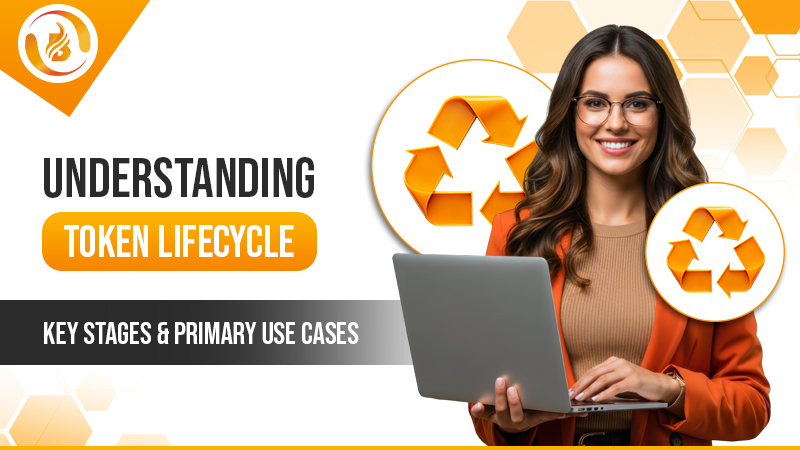
The token lifecycle refers to a token’s journey from creation (minting) to distribution, circulation, utilization, and retirement (burning). This guide will cover each stage, highlight key aspects of tokens, explore benefits and real-world applications, and show how Biovus helps businesses launch and manage blockchain tokens effectively.
Build Smarter Tokens with Biovus Blockchain Technologies
Partner with Biovus Blockchain Technologies, the best crypto token development company in India. We design secure, scalable, and future-ready token ecosystems — covering every stage from token creation and deployment to management, compliance, and lifecycle optimization.
Explore Our Token ServicesStages of the Token Lifecycle
1. Token Creation (Minting)
Tokens are generated on a blockchain using smart contracts. Key points:
- Smart contracts define token rules and functionality.
- Tokens can be utility, security, or governance types.
- Total supply and initial allocation are set.
2. Token Distribution
After creation, tokens are distributed via:
- ICO (Initial Coin Offering)
- Airdrops
- Private / Pre-Sales
This ensures fair access, encourages adoption, and stabilizes the market.
3. Token Circulation
Tokens start circulating when users trade or use them:
- Listed on exchanges for trading
- Part of liquidity pools for easy swaps
- Used within platforms for payments, rewards, or access
4. Token Utilization
Tokens have practical functions depending on type:
- Utility Tokens: Pay for services or access features
- Security Tokens: Represent equity, dividends, or investment rights
- Governance Tokens: Enable holders to vote on project decisions
5. Token Retirement (Burning)
Tokens may be permanently removed from circulation to:
- Reduce supply
- Create scarcity
- Reward holders and potentially increase value
Key Aspects of Tokens
Highlights Include:
- Smart Contracts: Rules and logic governing tokens
- Token Types: Utility, Security, Governance
- Token Supply: Total vs circulating supply
- Token Distribution: ICOs, airdrops, private sales
- Benefits: Market insight, investment strategy, ecosystem efficiency, security & compliance
Benefits of Understanding Token Lifecycle
- Market Insights: Predict adoption trends and token value
- Investment Strategy: Decide the best time to buy, hold, or sell
- Ecosystem Design: Build sustainable token economies
- Security & Compliance: Minimize fraud and regulatory risks
Real-World Use Cases
- Finance & Payments: Peer-to-peer and cross-border transactions
- Gaming: In-game rewards and tokenized items
- Supply Chain: Track ownership and movement of goods
- Governance: Voting in DAOs or blockchain communities
- DeFi Platforms: Staking, lending, and liquidity management
About Biovus: Crypto Token Development Company in India
Want to launch your own blockchain token? Biovus is a leading crypto token development company in India that provides end-to-end solutions for startups and businesses.
Services Include:
- Custom token development (Utility, Security, Governance)
- Smart contract creation and audits
- ICO, STO, and private sale token distribution
- Wallet and exchange integration
- Consultation for sustainable tokenomics
Why Biovus?
With expertise and technical precision, Biovus ensures your token is secure, compliant, and market-ready, giving your project a competitive edge.
Conclusion
Understanding the token lifecycle—from creation to retirement—is crucial for anyone involved in blockchain, crypto investment, or tokenized platforms. By focusing on stages, key aspects, and real-world use cases, investors and businesses can make informed decisions.
Partnering with Biovus allows you to successfully launch and manage tokens, ensuring technical robustness, compliance, and adoption.
Visit us at: www.biovustechnologies.com
FAQs
Q1: What is a token lifecycle?
A: The journey of a token from creation to distribution, usage, and retirement.
Q2: What are the main types of tokens?
A: Utility, security, and governance tokens.
Q3: Why is token burning important?
A: Burning reduces supply, creates scarcity, and can increase token value.
Q4: How does understanding token lifecycle help investors?
A: It helps determine the best time to buy, hold, or sell tokens.
Q5: Are token lifecycles only relevant to cryptocurrencies?
A: No, they also apply to gaming, supply chain, and DeFi tokens.
Q6: What is token minting?
A: The process of creating new tokens on a blockchain using smart contracts.
Q7: How are tokens distributed?
A: Through ICOs, airdrops, private sales, or pre-sales.
Q8: What’s the difference between utility and security tokens?
A: Utility tokens grant access to services; security tokens represent investment rights.
Q9: Can tokens be used for voting?
A: Yes, governance tokens allow holders to vote on project decisions.
Q10: Why are key aspects of tokens important?
A: They define rules, type, supply, distribution, and benefits, guiding investment and development decisions.