Search has undergone a dramatic transformation over the past decade. Traditional search engine optimization (SEO) focused on improving rankings in search engine results pages by targeting keywords, building backlinks, and optimizing website performance. Today, artificial intelligence is changing how people search, discover, and consume information. Instead of browsing multiple websites, users increasingly rely on AI-powered platforms to deliver direct, conversational answers.
This shift has introduced a new approach known as AI Optimization (AIO). Rather than optimizing content solely for search engine rankings, businesses and content creators must now ensure their content is understandable, trustworthy, and valuable for AI-driven search experiences. As AI assistants continue to reshape online discovery, AIO is becoming an essential part of every digital marketing strategy.
What Is AI Optimization (AIO)?
AI Optimization (AIO) is the practice of creating and structuring content so that artificial intelligence systems can easily understand, evaluate, and reference it when generating answers. Unlike traditional SEO, which primarily targets search engine algorithms, AIO focuses on making content useful for AI-powered platforms, large language models (LLMs), and generative search engines.
Modern AI search systems analyze content based on clarity, context, authority, relevance, and user intent. Well-structured, factually accurate, and experience-driven content has a greater chance of being referenced in AI-generated responses.
Why Traditional SEO Alone Is No Longer Enough
SEO remains an important foundation for digital visibility, but user behavior is changing rapidly. Many people now ask detailed questions through AI assistants instead of typing short keyword phrases into search engines. They expect immediate, accurate, and conversational answers.
Traditional SEO strategies often prioritize keyword density and ranking positions. AI-powered search, however, evaluates whether content genuinely answers a user’s question. Content that demonstrates expertise, provides practical insights, and explains complex topics clearly is far more likely to be surfaced by AI systems.
Businesses that continue relying only on traditional SEO risk losing visibility as AI-powered search becomes increasingly popular.
How AI Is Changing Search
Artificial intelligence has introduced a more intelligent way to discover information online. Instead of simply matching keywords, AI understands context, relationships between topics, and the intent behind a user’s question.
Modern AI-powered search platforms can:
- Understand natural language questions.
- Summarize information from multiple trusted sources.
- Deliver personalized and conversational answers.
- Recommend authoritative content.
- Continue conversations through follow-up questions.
This creates a better experience for users while encouraging publishers to produce higher-quality content rather than focusing solely on search rankings.
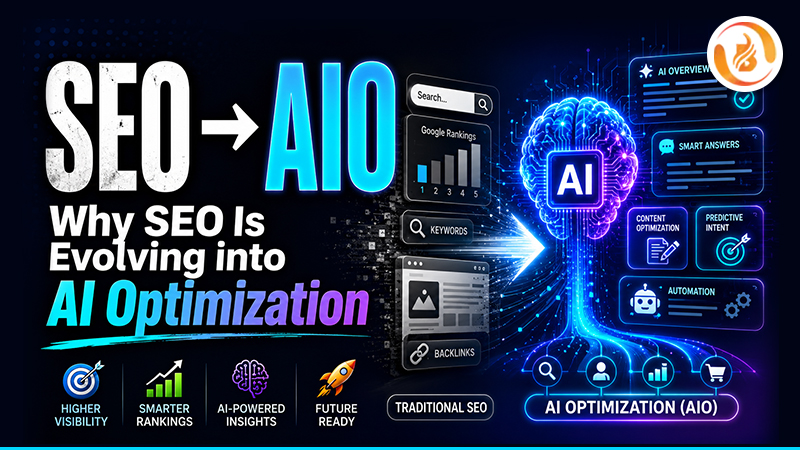
SEO vs AI Optimization (AIO)
Although SEO and AIO share the same goal of increasing online visibility, their methods are different.
| Traditional SEO | AI Optimization (AIO) |
|---|---|
| Focuses on keyword rankings | Focuses on user intent and context |
| Optimizes for search engines | Optimizes for AI-powered search systems |
| Prioritizes backlinks and technical signals | Prioritizes expertise, clarity, and trust |
| Targets search result clicks | Targets AI-generated recommendations and citations |
| Measures rankings and traffic | Measures visibility across AI search experiences |
Rather than replacing SEO, AIO builds upon it. The most successful content strategies combine both approaches.
Best Practices for AI Optimization
Creating content for AI-powered search requires a stronger emphasis on quality than ever before. The following best practices help improve visibility across both traditional and AI-driven search experiences.
Write for People First
Content should answer real questions in a natural and engaging way. Avoid keyword stuffing or writing solely for search engines. AI systems reward content that provides genuine value to readers.
Demonstrate Experience and Expertise
Share practical knowledge, examples, case studies, and industry insights whenever possible. Original perspectives make content more trustworthy and increase the likelihood of being referenced by AI.
Use Clear Structure
Organize content with descriptive headings, short paragraphs, bullet points, and logical sections. Clear formatting helps both readers and AI models understand the information efficiently.
Answer Questions Directly
Include concise answers to common questions before expanding into detailed explanations. This improves Answer Engine Optimization (AEO) and increases the chances of appearing in AI-generated responses.
Maintain Accuracy
Factually correct and regularly updated content builds trust with both users and AI systems. Outdated or misleading information reduces credibility.
Optimize Technical Performance
Fast-loading pages, mobile responsiveness, secure HTTPS connections, and structured data remain important foundations for both SEO and AI optimization.
The Growing Importance of Generative Engine Optimization (GEO)
Generative Engine Optimization (GEO) complements AI Optimization by focusing specifically on improving visibility within AI-generated responses. Instead of optimizing only for search rankings, GEO aims to increase the likelihood that AI systems reference your content when answering user queries.
Successful GEO strategies include publishing original research, providing expert commentary, maintaining factual accuracy, and covering topics comprehensively. Content that demonstrates authority is significantly more valuable than content created only to target keywords.
Common Mistakes to Avoid
As AI continues transforming search, some outdated optimization techniques become less effective. Avoid these common mistakes:
- Publishing thin or repetitive content.
- Overusing keywords unnaturally.
- Creating articles without real expertise.
- Ignoring user intent.
- Neglecting content updates.
- Publishing inaccurate or unverified information.
Long-term success depends on building trust rather than attempting to manipulate algorithms.
The Future of Search
Search is evolving from keyword matching to intelligent knowledge discovery. AI assistants, conversational search, and large language models are changing how users find information online. Businesses that adapt early will be better positioned to maintain visibility in this new digital landscape.
The future belongs to organizations that prioritize expertise, transparency, and user value. SEO will remain an important component of digital marketing, but AI Optimization and Generative Engine Optimization will increasingly shape how content is discovered, recommended, and trusted.
Conclusion
The evolution from traditional SEO to AI Optimization represents one of the most significant changes in digital marketing. Success is no longer measured only by search rankings but also by how effectively content answers questions, demonstrates expertise, and earns the trust of both users and AI systems.
By combining strong SEO fundamentals with AIO, AEO, and GEO best practices, businesses can create future-ready content that performs across search engines, AI assistants, and emerging discovery platforms. As search technology continues to evolve, investing in high-quality, authoritative, and user-focused content will remain the most reliable strategy for long-term online visibility.
Visit: www.biovustechnologies.com
Frequently Asked Questions (FAQs)
What is AI Optimization (AIO)?
AI Optimization (AIO) is the process of optimizing content so AI-powered search engines and large language models can understand, evaluate, and recommend it. It focuses on creating high-quality, trustworthy, and user-focused content.
How is AI Optimization different from SEO?
SEO improves a website’s visibility in traditional search engines, while AI Optimization helps content appear in AI-generated answers. Together, they improve visibility across both search engines and AI-powered search platforms.
What is Answer Engine Optimization (AEO)?
Answer Engine Optimization (AEO) is the practice of creating clear, direct answers to users’ questions. It helps content appear in featured snippets, voice search, and AI-generated search results.
What is Generative Engine Optimization (GEO)?
Generative Engine Optimization (GEO) optimizes content for AI search engines that generate answers instead of displaying only website links. It increases the chances of your content being referenced in AI responses.
Why is SEO evolving into AI Optimization?
Search is becoming more AI-driven. Users now expect conversational answers instead of just links, making AI Optimization essential for improving visibility in AI-powered search experiences.
Is traditional SEO still relevant?
Yes. Traditional SEO remains essential for search engine rankings. However, combining SEO with AI Optimization, AEO, and GEO provides better visibility across both search engines and AI platforms.
What are Large Language Models (LLMs)?
Large Language Models (LLMs) are AI systems trained on large datasets to understand language, answer questions, summarize content, and generate human-like responses for users.
How can I optimize content for AI search?
Create original, well-structured, accurate content that answers user questions clearly. Use descriptive headings, demonstrate expertise, update information regularly, and maintain strong technical SEO.
What is the future of search?
The future of search is AI-powered and conversational. Users increasingly receive direct answers from AI systems, making high-quality, trustworthy content more important than keyword-focused optimization.
Which is better: SEO or AI Optimization?
Neither is better on its own. SEO improves traditional search rankings, while AI Optimization increases visibility in AI-generated answers. Combining both delivers the strongest long-term search performance.