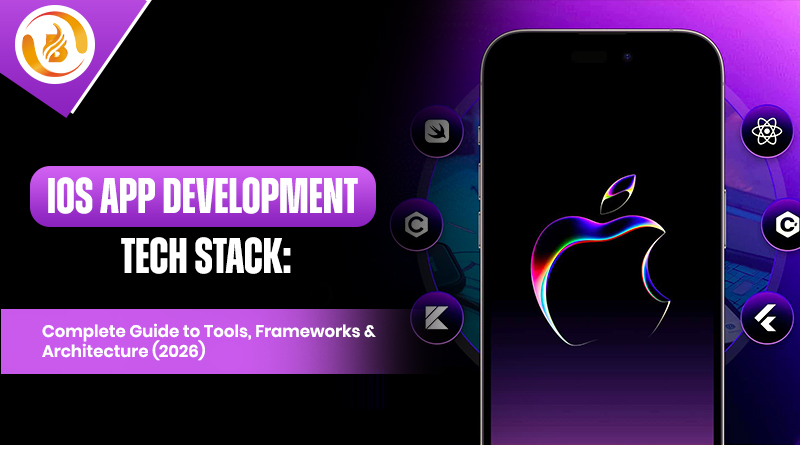
Choosing the right iOS development technology stack is one of the most critical decisions when building a modern mobile application. The technologies you select directly influence your app’s performance, scalability, security, user experience, and long-term maintenance costs.
With millions of applications available on the Apple App Store, businesses must make strategic technical choices to stay competitive. Whether you are developing a startup MVP or an enterprise-level application, understanding the iOS ecosystem helps you build efficiently and scale confidently.
This guide explains the complete iOS development stack in a clear and practical manner.
What Is iOS App Development?
iOS app development refers to the process of designing, building, testing, and maintaining applications for Apple devices such as iPhones and iPads.
An iOS development technology stack includes:
- Programming languages
- Frameworks
- Development tools
- Backend services
- Databases
- Deployment and monitoring systems
Together, these components create a stable and scalable application environment.
Core Components of the iOS Technology Stack
1. Frontend (Client-Side Development)
The frontend is the part of the app users interact with. It includes the interface design, animations, navigation, and integration with device features like camera, GPS, and notifications.
Modern iOS frontend development commonly uses:
- Swift
- SwiftUI
- UIKit
These tools enable developers to build responsive, visually appealing, and high-performance applications.
2. Backend (Server-Side Infrastructure)
The backend manages data processing, authentication, APIs, user management, and business logic. It ensures smooth communication between the app and the server.
Popular backend solutions include:
- Amazon Web Services
- Firebase
- Custom-built REST or GraphQL APIs
A strong backend ensures scalability, security, and reliable performance.
3. Database Layer
Databases store and organize application data either locally on the device or in the cloud.
Common database technologies:
- Core Data (local storage)
- Cloud Firestore
- PostgreSQL
Choosing the right database depends on your app’s complexity and scalability needs.
Why Choose iOS Development?
Higher Revenue Opportunities
iOS users are generally more engaged and tend to spend more on in-app purchases and subscriptions.
Strong Security and Privacy
Apple enforces strict review guidelines and privacy policies, helping maintain high security standards.
Optimized Hardware and Software Integration
Because Apple controls both hardware and software, apps typically perform smoothly across devices.
Premium Market Positioning
Launching on iOS often enhances brand credibility and product perception.
iOS Development Process Overview
1. Market Research
Define your target audience, identify competitors, and validate your app idea.
2. Planning and Architecture
Select an appropriate architecture pattern such as MVC or MVVM and set up the project in Xcode.
3. UI/UX Design
Create wireframes, prototypes, and user interface designs aligned with user expectations.
4. Development
Build the application using Swift and modern UI frameworks. Integrate backend APIs and services.
5. Testing
Use tools like XCTest to conduct unit testing and UI testing. Perform beta testing before launch.
6. Deployment
Submit the app to the App Store and monitor performance after release.
Post-Launch Strategies
App Store Optimization (ASO)
Use relevant keywords, compelling descriptions, and high-quality visuals to improve visibility.
Push Notifications
Engage users with timely and personalized updates.
Analytics
Track performance and user behavior using tools such as Firebase Analytics or Mixpanel.
Continuous Updates
Regularly improve features, fix bugs, and enhance security.
Conclusion
A well-planned iOS development technology stack ensures your application remains secure, scalable, and high-performing over time.
By understanding frontend frameworks, backend services, databases, and development tools, you can make informed decisions that align with your business objectives.
Selecting the right technologies from the beginning reduces future costs, simplifies maintenance, and supports long-term growth.
Visit us at: www.biovustechnologies.com
Frequently Asked Questions (FAQ)
What is an iOS development technology stack?
An iOS development technology stack refers to the combination of programming languages, frameworks, development tools, and services used to build native applications for Apple devices such as iPhone and iPad.
What IDE is used for iOS app development?
Xcode is Apple’s official integrated development environment used to design, develop, test, and deploy iOS applications.
What UI framework is used in modern iOS apps?
SwiftUI is widely used to build declarative, responsive, and modern user interfaces for iOS applications.
What testing tools are used in iOS development?
XCTest is commonly used for unit testing and UI testing in iOS projects.
How is app performance optimized?
Developers use profiling tools such as Instruments within Xcode to monitor memory usage, CPU performance, and battery consumption.
Is cross-platform development part of the iOS stack?
Yes. Frameworks like Flutter and React Native allow developers to build applications for both iOS and Android platforms.