YouTube DMs Are Back After 6 Years — Here’s the Full Story!
For the first time since 2019, YouTube is bringing back a feature users have been asking about for years: in-app private messaging. In late November 2025, YouTube quietly began testing a new in-app chat system that lets users share videos, Shorts, and messages without leaving the YouTube app.
This announcement immediately raised questions:
- Didn’t YouTube already have DMs before?
- Why were they removed?
- Why bring them back after six years?
- Why test only in Ireland and Poland?
- Do you need ID or KYC to access it?
This Blog explains the entire story — from the beginning in 2017 to today in 2025.
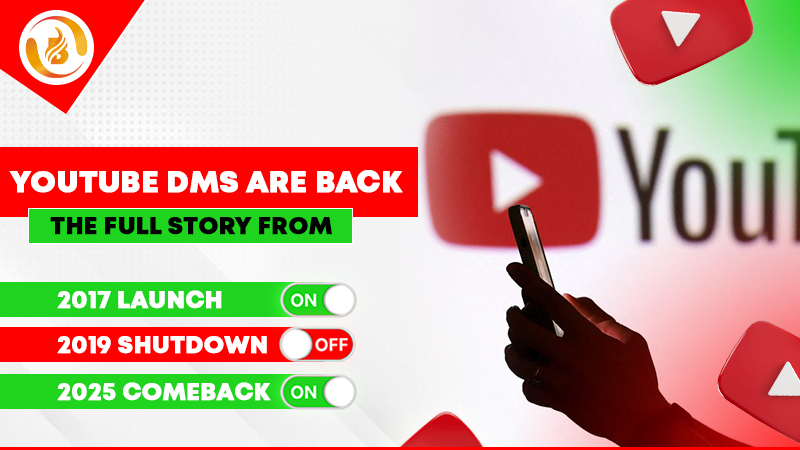
2017: YouTube Launches Its First In-App Messaging Feature
In August 2017, YouTube introduced a brand-new feature inside its mobile app:
“Shared tab + Private Messaging.”
Users could:
- share videos with friends inside YouTube
- create small group chats
- reply with other videos
- discuss links without switching apps
At the time, YouTube wanted to make the platform “more social,” similar to how Instagram and Snapchat were growing.
2019: YouTube Removes the Feature — Why It Failed
Just two years later, in September 2019, YouTube officially removed the in-app messaging feature. The reasons were clear:
1. Low Usage
The feature existed, but very few users used it daily.
People still preferred WhatsApp, Instagram, Messenger, or SMS for sharing videos.
2. Moderation & Child Safety Challenges
Private messaging is difficult to monitor safely.
During 2018–2019, YouTube faced huge pressure regarding child safety, comment moderation, and privacy concerns.
Removing private messages reduced the risk and simplified enforcement.
3. YouTube Wanted to Focus on Public Features
In 2019, YouTube said it wanted to invest more into:
- comments
- community posts
- live chat
- stories
These public engagement tools were growing faster than private messaging.
And so, the feature was shut down quietly on September 18, 2019.
2019–2024: Six Years Without YouTube DMs — What Changed?
After the shutdown, the world — and YouTube — evolved dramatically.
1. Short-form video became king
- TikTok exploded.
- Instagram Reels grew.
- YouTube responded with Shorts, which skyrocketed in popularity.
Short-form video naturally leads to instant reactions and quick sharing — something messaging supports perfectly.
2. Link sharing moved off YouTube
People shared YouTube links via:
- Telegram
- Instagram DMs
- Discord
YouTube noticed that important conversations about videos were happening outside YouTube.
3. Creators needed better connection tools
Creators wanted:
- fast communication
- collaboration channels
- community-driven discussions
YouTube saw that private communication could help creators engage more effectively.
4. Safety technology improved
Modern tools now allow:
- stronger age verification
- better AI moderation
- clearer reporting & blocking systems
This made private messaging safer to reintroduce.
2025: YouTube Tests a New In-App Messaging System Again
In late November 2025, YouTube officially began testing a new messaging experience, but with tighter controls and improved design.
Key details of the new test
- Available only for 18+ adults
- Available only in Ireland & Poland
- Works inside the YouTube mobile app
- Allows sharing of videos, Shorts, and live streams
- Requires invites before messaging someone
- Includes blocking, reporting, and moderation tools
- YouTube clearly labels it as an experiment, not a full rollout
This time, YouTube wants to:
- keep users inside the platform
- increase watch time
- support Shorts virality
- help creators drive engagement
Why Only Ireland & Poland? The Strategic Reasoning
YouTube did NOT publicly explain the exact reason for choosing these two specific countries, but based on Google’s long history of regional tests, the logic is easy to understand.
1. Mid-sized, safe testing markets
Ireland and Poland are large enough for real data but small enough to control issues.
2. EU-level privacy + strong digital regulations
Testing inside Europe ensures compliance with:
- GDPR
- Digital Services Act (DSA)
This means YouTube can test safety and privacy requirements early.
3. English-speaking & non-English-speaking mix
- Ireland = English-speaking market
- Poland = non-English-speaking market
- This helps test communication behavior across cultures.
4. Lower risk of immediate misuse
Unlike massive markets like India, U.S., or Brazil, Ireland/Poland have manageable user volumes during experiments.
5. Google regularly tests in these markets
Google often chooses:
- Ireland
- Poland
- Canada
- New Zealand
because they produce clean, high-quality user behavior data.
Do Users in Ireland & Poland Need KYC or ID to Use the Feature?
No, there is no mandatory KYC or identity verification.
However, because the feature is restricted to 18+, Google uses the following to confirm age:
1. Google Account Date of Birth
When you created your Google account, you entered your DOB.
If it shows you’re above 18, the feature is enabled.
2. Additional Age Checks (only if needed)
Sometimes Google may request:
- a credit card check
- a government ID scan
This only happens if your age is unclear or if previous activity triggered verification.
These are not special requirements for the chat feature.
They are standard YouTube age verification tools used for any age-restricted content.
3. Location Verification
YouTube checks:
- your IP address
- device location
- app region settings
You don’t need to upload proof of address.
Will This Feature Expand Worldwide?
Yes — if the test in Ireland & Poland succeeds:
YouTube will expand the chat feature to:
- EU
- U.S.
- India
- Southeast Asia
- Global markets
YouTube has clearly stated that:
future rollout depends on user feedback, safety performance, and engagement results.
Why Is YouTube Bringing Messaging Back After 6 Years?
Here is the strongest reason:
” Because conversations about YouTube videos are happening everywhere except YouTube. “
YouTube wants to keep conversations inside its own ecosystem.
Messaging helps:
- increase watch time
- boost Shorts sharing
- strengthen creator communication
- improve content discovery
- reduce reliance on external apps
In short — YouTube wants to become more social again.
Conclusion — YouTube Messaging Is Returning Smarter, Safer, and More Useful
YouTube’s new messaging test is not just a random experiment.
It is a strategic decision shaped by:
- past failures
- rising competition from TikTok
- growing creator demands
- social media shifting toward private conversations
- stronger safety tools
- better understanding of user behavior
After shutting down DMs in 2019, YouTube waited six years — until the timing, technology, and user trends aligned — to bring it back in a smarter, more controlled way.
Whether this new feature becomes global depends on one thing:
how users in Ireland and Poland respond.
But one thing is clear — YouTube is preparing for a more social future.
Visit our website: www.biovustechnologies.com
FAQs About YouTube Chat & DMs (2025 Update)
1. What is the new YouTube chat feature?
The new YouTube chat is an in-app private messaging system that lets users share videos, Shorts, and live streams with friends or small groups without leaving the YouTube app. It also includes moderation tools like blocking and reporting.
2. When did YouTube first introduce in-app messaging?
YouTube first launched in-app messaging in August 2017. It allowed users to share videos, create group chats, and discuss content without switching apps.
3. Why did YouTube remove DMs in 2019?
The feature was removed due to low usage, moderation challenges, and safety concerns, especially for minors. YouTube decided to focus on public engagement tools like comments, Stories, and live chat.
4. When is the 2025 YouTube chat test happening?
YouTube began testing the new chat feature in late November 2025. It is currently a limited experiment, not a global rollout.
5. Which countries currently have access to YouTube chat?
The 2025 test is only available in Ireland and Poland for users aged 18 and above.
6. Is YouTube chat only for users 18+?
Yes. The feature is restricted to 18+ adults to comply with privacy and safety regulations.
7. Do I need to verify my ID or KYC to use YouTube chat?
No. YouTube uses your Google account date of birth to confirm your age. ID or credit card verification is only requested if your age is unclear.
8. Can I share YouTube Shorts in the chat?
Yes! Users can share videos, Shorts, and live streams directly in the chat threads.
9. Can creators use YouTube chat to communicate with fans?
Yes. Creators can use chat to engage with fans, collaborate with other creators, and share behind-the-scenes content, though the feature is currently in a limited test phase.
10. How does YouTube prevent abuse in chat?
YouTube includes blocking, reporting, and moderation tools, and the system uses AI to detect spam or inappropriate messages. Only verified users above 18 can access it in the test regions.
11. Will YouTube chat be available worldwide?
Potentially. YouTube plans to expand globally if the test in Ireland and Poland succeeds and engagement is positive.
12. How does YouTube verify age and location?
Age is verified using your Google account DOB. Location is checked through IP address, app region, and device info. No additional proof is required for most users.
13. Can I block or report someone in YouTube chat?
Yes. The new chat includes blocking, reporting, and moderation tools to ensure user safety.
14. Why did YouTube wait 6 years to bring messaging back?
After removing DMs in 2019, YouTube waited until short-form video, creator engagement needs, and improved moderation tools made it safer and more strategic to reintroduce messaging.
15. How does YouTube chat affect video sharing and engagement?
Messaging keeps video sharing inside YouTube, increasing watch time and engagement. It also helps Shorts go viral and allows creators to communicate directly with audiences.