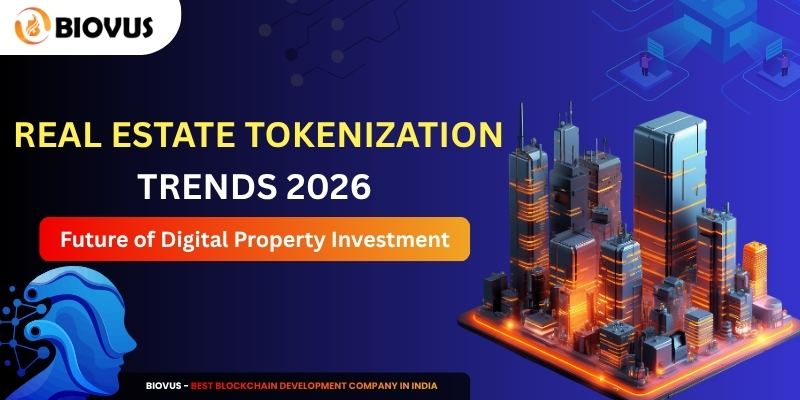
The real estate sector is evolving rapidly in 2026, driven by blockchain innovation and digital asset tokenization. Traditionally, property investment has been limited by high capital requirements, lengthy transactions, and low liquidity. Today, tokenization is transforming these limitations by converting physical real estate assets into digital tokens on the blockchain.
This shift is not just a technological upgrade, it is redefining how people invest, trade, and manage real estate globally. Let’s explore the top trends shaping real estate tokenization in 2026.
1. Fractional Ownership Gains Wider Adoption
Fractional ownership is becoming a core feature of tokenized real estate. Investors no longer need large funds to enter the market. Instead, they can purchase smaller shares of premium properties.
In 2026, this model is attracting a broader audience, including first-time investors. It allows individuals to diversify their portfolios and reduce financial risk by investing in multiple properties instead of a single asset.
2. Improved Liquidity in Real Estate Markets
One of the biggest challenges in traditional real estate is illiquidity. Selling a property can take months or even years. Tokenization addresses this issue by enabling digital trading of property shares.
With the rise of secondary marketplaces in 2026, investors can buy and sell tokenized assets more quickly. This increased liquidity is making real estate a more flexible and attractive investment option.
3. Smart Contracts Streamlining Operations
Smart contracts are automating key real estate processes. These blockchain-based programs execute transactions automatically when predefined conditions are met.
They are widely used for:
- Rental income distribution
- Ownership transfers
- Agreement enforcement
In 2026, smart contracts are reducing manual work, lowering operational costs, and improving transparency across real estate transactions.
4. Cross-Border Investment Opportunities
Tokenization is breaking geographical barriers. Investors can now access properties in different countries without complex legal procedures.
This global accessibility is one of the strongest trends in 2026. It allows investors to explore high-growth markets worldwide while enabling developers to attract international funding.
5. Rise of Digital Real Estate Marketplaces
Modern tokenization platforms are evolving into complete digital ecosystems. These platforms offer everything from property listings to trading and portfolio management.
In 2026, user-friendly interfaces and advanced features are making it easier for investors to participate in tokenized real estate without technical expertise.
6. Stronger Regulatory Frameworks
Regulatory clarity is improving across many regions. Governments are introducing clearer guidelines for digital assets and tokenized investments.
Tokenization platforms are now integrating compliance features such as KYC (Know Your Customer) and AML (Anti-Money Laundering). This is increasing trust and encouraging institutional investors to enter the market.
7. Multi-Chain Tokenization Solutions
Blockchain technology is becoming more flexible with multi-chain solutions. Instead of relying on a single network, tokenized assets can now operate across multiple blockchains.
This trend improves scalability, reduces transaction costs, and enhances system performance, making tokenization platforms more efficient in 2026.
8. Integration of AI with Blockchain
Artificial Intelligence is playing a growing role in real estate tokenization. AI tools help analyze property value, market trends, and investment risks.
When combined with blockchain transparency, AI enables smarter decision-making and better asset management.
9. Expansion into New Asset Types
Tokenization is no longer limited to residential or commercial buildings. In 2026, it includes a wide range of real estate assets such as:
- Land
- Co-working spaces
- Warehouses
- Infrastructure projects
This expansion is unlocking new opportunities for investors and developers.
10. Growing Institutional Participation
Institutional investors are increasingly entering the tokenized real estate space. Their involvement brings credibility, stability, and larger capital inflows.
This trend indicates that tokenization is moving beyond early adoption and becoming a mainstream investment model.
Conclusion
Real estate tokenization is reshaping the property investment landscape in 2026. With improved accessibility, liquidity, and transparency, it offers a modern solution to traditional challenges.
As technology continues to evolve, tokenization is expected to play a major role in the future of global real estate, making investments more inclusive and efficient.
Build Your Tokenized Real Estate Platform with Biovus Blockchain Technologies
Biovus Blockchain Technologies is a leading provider of advanced blockchain solutions in India, specializing in real estate tokenization development.
We help businesses transform physical assets into secure digital investment opportunities through scalable and compliant platforms.
Our Services Include:
- End-to-end real estate tokenization platform development
- Smart contract development and auditing
- Multi-chain blockchain integration
- Investor dashboards and digital marketplaces
- KYC and AML compliance solutions
Whether you are a startup, real estate developer, or enterprise, Biovus Blockchain Technologies delivers customized solutions to help you succeed in the digital asset economy.
Partner with us to unlock global investment opportunities and build the future of real estate.
Build Your Tokenized Real Estate Platform with Biovus Blockchain Technologies
Schedule Free DemoFrequently Asked Questions (FAQs)
1. What is real estate tokenization?
It is the process of converting property ownership into digital tokens on a blockchain.
2. How does tokenization benefit investors?
It allows easy access, lower investment amounts, and better liquidity.
3. What is fractional ownership in real estate?
It means owning a small portion of a property instead of buying the entire asset.
4. Is tokenized real estate safe?
Yes, blockchain technology ensures transparency and secure transactions.
5. Can I sell my tokens anytime?
Yes, many platforms offer secondary markets for trading tokens.
6. Do I need a large investment to start?
No, tokenization allows investment with smaller amounts.
7. What role do smart contracts play?
They automate transactions and reduce the need for intermediaries.
8. Is real estate tokenization legal?
It depends on the country, but regulations are improving globally.
9. Who can invest in tokenized real estate?
Both individual and institutional investors can participate.
10. Why choose Biovus Blockchain Technologies?
They provide secure, scalable, and fully customized tokenization solutions.