
Introduction
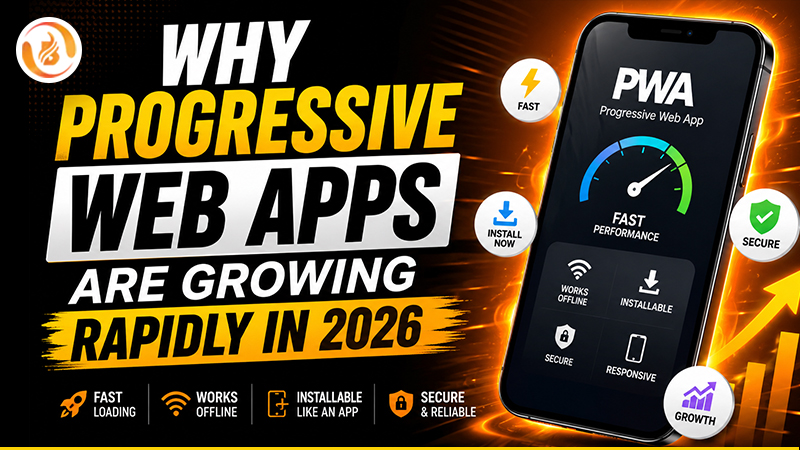
As businesses continue to prioritize speed, user experience, and cost-effective digital solutions, Progressive Web Apps (PWAs) have become one of the most important technologies shaping the future of web development. In 2026, organizations across industries are adopting PWAs to deliver fast, reliable, and engaging digital experiences without requiring users to download traditional mobile applications.
A Progressive Web App combines the accessibility of a website with the functionality of a native mobile application. Users can access a PWA directly through a web browser while enjoying features such as offline access, push notifications, fast loading speeds, and app-like navigation. This combination has made PWAs an attractive solution for businesses looking to improve customer engagement and increase conversions.
In this article, we’ll explore why Progressive Web Apps are growing rapidly in 2026, their key benefits, and why they are becoming an essential part of modern digital transformation.
What Is a Progressive Web App (PWA)?
A Progressive Web App (PWA) is a web application built using modern web technologies that delivers an app-like experience on desktops, tablets, and smartphones. Unlike traditional mobile applications, PWAs do not require installation from an app store. Users can access them directly through a web browser and, if desired, save them to their device’s home screen.
PWAs combine responsive design, secure connections, caching technologies, and advanced browser capabilities to provide a smooth and consistent user experience across multiple devices.
Why Progressive Web Apps Are Growing Rapidly in 2026
1. Faster Loading Speeds
Website speed directly impacts user satisfaction and search engine rankings. Progressive Web Apps use intelligent caching techniques that significantly reduce loading times, even on slower internet connections.
A fast-loading website helps reduce bounce rates, improve user engagement, and increase conversion rates. Businesses are increasingly choosing PWAs because they provide a smooth browsing experience without unnecessary delays.
2. Improved Mobile User Experience
Mobile devices generate the majority of global web traffic. PWAs are designed with a mobile-first approach, ensuring that websites adapt seamlessly to different screen sizes.
Users enjoy app-like navigation, smooth scrolling, responsive layouts, and quick interactions without the need to install a dedicated application. This convenience leads to better customer satisfaction and higher user retention.
3. Offline Functionality
One of the standout features of PWAs is their ability to function even when internet connectivity is limited or unavailable.
Using service workers, PWAs can store important website resources locally, allowing users to browse previously visited pages or continue using essential features while offline. This capability is especially valuable for businesses serving users in areas with inconsistent internet access.
4. Lower Development and Maintenance Costs
Developing separate applications for Android, iOS, and the web can require significant time and investment.
A Progressive Web App allows businesses to maintain a single codebase that works across multiple platforms. This reduces development costs, simplifies maintenance, speeds up updates, and ensures a consistent user experience across devices.
5. Better Search Engine Visibility
Unlike native mobile applications, Progressive Web Apps are indexed by search engines because they operate as websites.
This gives businesses an opportunity to improve their online visibility through search engine optimization (SEO). High-quality content, optimized page speed, responsive design, and structured web pages help PWAs attract organic traffic and improve search rankings.
6. Push Notifications Improve Customer Engagement
PWAs support browser-based push notifications, allowing businesses to reconnect with users even after they leave the website.
Companies can share product updates, promotional offers, important announcements, or personalized recommendations directly with users. When used strategically, push notifications can increase repeat visits and customer engagement.
7. Enhanced Security
Security remains a top priority for businesses and customers alike.
Progressive Web Apps are served over HTTPS, ensuring encrypted communication between users and servers. This helps protect sensitive information, reduces security risks, and builds customer trust.
8. No App Store Dependency
Traditional mobile applications must go through app store approval processes before reaching users.
PWAs eliminate this dependency by allowing users to access the application instantly through a web browser. Businesses can release updates immediately without waiting for app store approvals, making it easier to introduce new features and fix issues quickly.
Key Benefits of Progressive Web Apps
Businesses adopting Progressive Web Apps can expect several long-term advantages:
- Faster website performance
- Better user experience across devices
- Offline accessibility
- Reduced development costs
- Improved SEO performance
- Higher customer engagement
- Increased conversion rates
- Stronger website security
- Simplified maintenance
- Easy deployment without app stores
These benefits make PWAs an excellent choice for startups, small businesses, and large enterprises alike.
Industries Benefiting from PWAs
Progressive Web Apps are being adopted across a wide range of industries, including:
- E-commerce and online retail
- Healthcare services
- Financial institutions
- Educational platforms
- Travel and hospitality
- Food delivery services
- Real estate businesses
- News and media websites
- Software-as-a-Service (SaaS) platforms
- Manufacturing and industrial businesses
As organizations continue investing in digital transformation, the demand for PWAs is expected to grow even further.
The Future of Progressive Web Apps
The future of Progressive Web Apps looks highly promising. Modern web browsers continue to introduce new capabilities that make PWAs even more powerful. Improved hardware integration, enhanced offline functionality, better performance optimization, and stronger security standards are encouraging more businesses to adopt this technology.
As customer expectations continue to rise, organizations are looking for digital solutions that deliver speed, convenience, and reliability. Progressive Web Apps meet these expectations while reducing development complexity and operating costs.
For businesses planning long-term digital growth, investing in a PWA is becoming a strategic decision rather than simply a technology upgrade.
Conclusion
Progressive Web Apps have become one of the fastest-growing web technologies in 2026 because they combine the best features of websites and mobile applications into a single solution. They provide faster performance, improved user experiences, offline functionality, better security, and lower development costs while supporting strong SEO performance.
As businesses focus on delivering seamless digital experiences across every device, PWAs are emerging as a practical and future-ready solution. Organizations that adopt Progressive Web Apps today can improve customer satisfaction, increase online visibility, and stay competitive in an increasingly digital marketplace.
Frequently Asked Questions (FAQs)
1. What is a Progressive Web App (PWA)?
A Progressive Web App is a website that delivers an app-like experience using modern web technologies. It can be accessed through a browser and offers features such as offline access, push notifications, and fast performance.
2. Why are PWAs becoming popular in 2026?
PWAs are growing rapidly because they offer faster loading speeds, better mobile experiences, offline functionality, improved SEO, lower development costs, and enhanced customer engagement.
3. Do Progressive Web Apps work offline?
Yes. PWAs use service workers to store important resources locally, allowing users to access certain content and features even without an internet connection.
4. Are Progressive Web Apps better than native mobile apps?
The answer depends on business requirements. PWAs are often more cost-effective, easier to maintain, and accessible through web browsers, while native apps may still be preferred for applications requiring advanced device-specific features.
5. Which businesses should consider developing a PWA?
Businesses in e-commerce, healthcare, finance, education, travel, SaaS, media, and other industries can benefit from PWAs by improving user experience, increasing customer engagement, and reducing development costs.